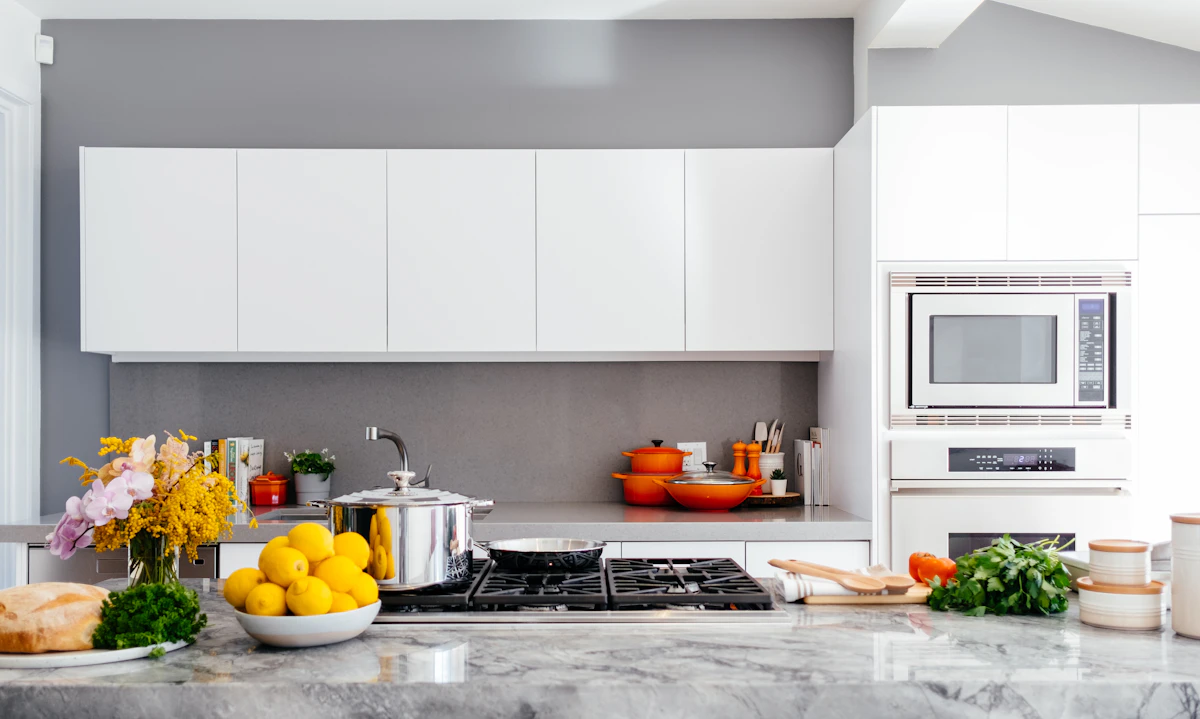
The kitchen is the most-used room in almost every home. It is where the day starts, where meals are made, where families gather, where the morning rush plays out. When a kitchen works well — when everything is where it should be and finding things takes no effort at all — it is one of the most quietly satisfying experiences a home can offer. When it does not work, the friction is constant and exhausting.
The difference between a kitchen that works and one that does not is almost never the kitchen itself. It is the system — or the absence of one.
Why Kitchen Organization Systems Fail
Most kitchen organization efforts fail for one of three reasons, and usually all three together:
Aesthetic containers without functional logic. Matching canisters and labeled bins look beautiful on Instagram. But if the system does not match how you actually cook and shop, it will stop being used within weeks. Nobody re-decants flour at 7 AM on a Tuesday.
Zones not matched to actual cooking habits. Putting the coffee maker in an inconvenient spot because it "fits" there, or storing everyday dishes behind seasonal serving platters — these mismatches create daily friction that adds up to a kitchen that feels like work rather than support.
No maintenance protocol. Even a perfect system drifts without small, consistent habits to reset it. A kitchen that has no built-in reset rhythm slowly reverts to disorder, and the owner concludes the organization "didn't stick" — when the real issue is that maintenance was never part of the plan.
The Zone Method for Kitchen Organization
A well-organized kitchen is divided into zones based on frequency of use and proximity to where the use actually happens. This is the foundation of every kitchen system we build:
Zone 1 — Daily use. The items you reach for every single day: coffee equipment, everyday dishes and glasses, cooking tools you use for most meals, frequently used spices. These live at counter level and in the most easily accessible cabinet space — within arm's reach of where you use them. The coffee equipment should be next to the water source. The everyday dishes should be next to the dishwasher. The cooking tools should be next to the stove.
Zone 2 — Weekly use. Items you reach for several times a week but not daily: specialty cooking equipment, serving dishes you use for family meals, the blender, the stand mixer. These belong on middle shelves and in accessible (but not prime) cabinet real estate.
Zone 3 — Seasonal or occasional use. Holiday serving pieces, specialty appliances you use once or twice a year, bulk storage. These live on high shelves, in deep cabinets, or in secondary storage areas. They do not need to be accessible daily — they need to be findable when the occasion arises.
Pantry Systems That Prevent Waste
A well-organized pantry does more than look tidy. It actively reduces food waste by making expiration dates visible, prevents duplicate purchases by making inventory clear, and makes meal planning faster and more intuitive.
FIFO principle (First In, First Out). New items go to the back; older items stay at the front. This simple principle, borrowed from commercial food service, dramatically reduces the experience of discovering expired items at the back of a shelf.
Category grouping. Organize by food type: baking supplies together, grains and pasta together, canned goods by category, snacks in one area. This makes it possible to see at a glance what you have and what you are running low on.
Decanting — when it actually helps. Decanting pantry staples into uniform containers looks beautiful, but it only makes sense for items you use frequently enough to justify the refilling process. Flour, sugar, pasta, rice, cereals — yes. Specialty items used occasionally — generally not worth the maintenance effort.
The 15-Minute Weekly Kitchen Reset
The most important part of any kitchen organization system is the habit that maintains it. We recommend a weekly reset of no more than 15 minutes, timed to a consistent moment in your week:
- Return everything to its home that has drifted out of place
- Process any papers or items that have landed on counter surfaces
- Do a quick pantry scan for items nearing expiration
- Wipe down the inside of the most-used drawers and shelves
Fifteen minutes, once a week, prevents the accumulation that makes kitchen reorganization feel necessary every few months. This small investment is the difference between a system that lasts and one that does not.
When to Call a Professional
Some kitchen challenges are better solved with fresh eyes. If you have reorganized your kitchen multiple times and it still does not feel right, if you frequently cannot find things even though you know you have them, or if your pantry regularly generates wasted food — these are signs that the system itself needs a professional rebuild, not just another tidy.
Our professional home organizing service includes kitchen and pantry as a standard zone. We assess your cooking habits, your shopping patterns, your household size, and your storage capacity — and we build a system specific to how your kitchen actually works, not how a generic organization guide says it should work.
A kitchen that works for you is not about perfection. It is about knowing exactly where everything is — and being able to find it at 6 AM.
Ready for a Kitchen That Finally Works?
A professional kitchen and pantry system built around your actual habits — book a free 20-minute call to start the conversation.
